
For more than a century, insulin has been a lifesaving treatment for people living with type 1 diabetes (T1D), a disease triggered by autoimmune attack on the endocrine pancreatic beta cells that produce insulin. Yet despite remarkable advances in insulin delivery, glucose monitoring, and disease management, a cure remains elusive.
For Feroz Papa, M.D., Ph.D., a researcher and endocrinologist at the University of California, San Francisco (UCSF), the path toward better treatments may begin by looking beyond the immune system and examining what happens inside the beta cells responsible for producing insulin.
With support from Critical Path Institute’s® (C-Path) Translational Therapeutics Accelerator (TRxA) and The Leona M. and Harry B. Helmsley Charitable Trust, Papa and his collaborators, UCSF Associate Professor Bradley J. Backes, Ph.D., and University of Washington-Seattle Professor of Chemistry Dustin J. Maly, Ph.D, are working to translate decades of research into a potential new therapeutic approach that could help preserve insulin-producing cells and improve outcomes for people living with T1D.
A Different Approach to Diabetes
Papa’s interest in diabetes began with a fundamental biological question: What happens when secretary proteins such as insulin inside cells fail to fold properly?
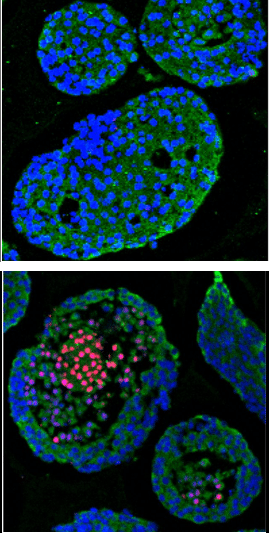
His research focuses on an ancient protein called IRE1α, which helps cells respond to stress and maintain healthy protein production. While this Unfolded Protein Response (UPR) is essential for normal cellular function, excessive activation can contribute to cell death.
In diabetes, the consequences can be particularly severe.
Type 1 diabetes is traditionally understood as an autoimmune disease in which the immune system attacks insulin-producing beta cells in the pancreas. However, Papa’s research explores another contributing mechanism: the possibility that stressed beta cells activate the UPR pathway caused by protein misfolding in the endoplasmic reticulum organelle where insulin folds and matures, leading to their own destruction.
“Focusing strictly on the homicide part of it might not be getting at the whole problem,” Papa explained, describing the distinction between immune-mediated cell death and the beta cells’ own stress responses that lead beta cells to commit suicide through IRE1α hyperactivation in the face of endoplasmic reticulum stress.
His team has developed experimental compounds known as Partial Antagonists of IRE1α RNase, or “PAIR”s, designed to modulate the destructive UPR without completely shutting down its essential functions.
The goal is to find what Papa calls a “Goldilocks zone,” — think not too hot, not too cold, but just right — preserving the UPR pathway’s beneficial activities through precision modulation of IRE1α while limiting its destructive responses that contribute to cell death.
If successful, this approach could eventually complement existing immune-directed therapies, potentially preserving remaining beta cells in people newly diagnosed with T1D.
C-Path and Its Translational Therapeutics Accelerator: The Bridge Between Discovery and Treatment
Promising laboratory discoveries do not automatically become viable medicines. Transforming experimental compounds into potential therapies requires specialized medicinal chemistry, extensive testing, and a clear drug development strategy.
That is where C-Path’s Therapeutics Accelerator has made a meaningful difference.
Papa’s collaboration with the C-Path team began through an introduction facilitated by Ben Williams, Ph.D., Program Officer at Helmsley. An initial $500,000 award through C-Path was matched by an additional $500,000 from Helmsley, creating a foundation for advancing the research. Recognizing the potential impact for the T1D community, Helmsley has continued to support the project. Helmsley’s Type 1 Diabetes Program, the largest private foundation funder in the world with a focus on T1D, has backed the program with a total investment of $1,100,700.
C-Path helped bring together academic researchers, medicinal chemists and drug development specialists to optimize the compounds and address challenges that must be overcome before clinical testing.
According to Papa, the team’s scientific expertise and hands-on engagement have been particularly valuable.
“I’d say it’s one of the most organic teams I’ve worked with,” Papa explained. “There’s a synergy between the academic chemists, and the team at TRxA. We’re all on the same page and we know what to do next.”
“Feroz is an exceptional scientist, and Brad and Dusty bring complementary expertise that makes this a particularly strong team,” added C-Path’s Executive Director of the TRxA team, Maaike Everts. “What I’ve really appreciated is their openness to our ideas and the collaborative way we work together. At TRxA, we also help maintain momentum by regularly evaluating progress, discussing priorities, and keeping the next development milestones in sight. The early animal data are especially encouraging, suggesting that these new compounds could work synergistically with treatments already used in the clinic. There’s still work to be done, but I’m genuinely excited about the potential to move this promising science toward clinical trials.”
Unlike traditional research funding arrangements, the Translational Therapeutics Accelerator model and process includes regular meetings, shared accountability, and continuous evaluation of development milestones.
The partnership has also helped expand the team’s ability to develop PAIR compounds using different chemical structures, potentially improving their effectiveness, selectivity, and suitability for future clinical development.
Looking Toward the Future
While the research remains in the preclinical stage, Papa sees significant potential for improving the lives of people with T1D.
Even preserving a portion of the body’s remaining insulin-producing capacity could represent meaningful progress, potentially reducing insulin requirements and helping patients manage fluctuations in blood glucose.
Want to learn more about C-Path’s Translational Therapeutics Accelerator and its life-changing work?