

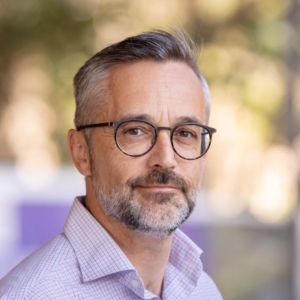
For nearly a decade, head of the Queensland Emory Drug Discovery Initiative (QEDDI) Brian Dymock, Ph.D, and his colleagues have pursued an ambitious goal: translate an intriguing piece of cancer biology into a potential new treatment for patients with advanced prostate cancer. QEDDI is a translational drug discovery group established through a partnership between UniQuest and the University of Queensland operating like a small biotech company.
The research began at the University of Queensland in the laboratory of Professor Greg Monteith, with TRPV6, a calcium channel found to be upregulated in prostate cancer cells. Increased TRPV6 expression can help cancer cells draw in the calcium they need for survival and growth. Early studies showed that blocking the channel could have a dramatic effect on cancer cells, providing the foundation for a drug discovery program that Brian joined in 2017.
What followed was years of rigorous medicinal chemistry and translational research by QEDDI in collaboration with Professor Monteith. The team designed and evaluated more than 2,000 potential drug candidates, steadily optimizing their properties and studying their effects. That work ultimately produced QED-203, the development candidate at the center of the program.
For Brian, one of the most significant discoveries came when the researchers realized their compounds could do more than inhibit TRPV6. Certain molecules also inhibited the androgen receptor, another critical driver of prostate cancer.
The finding presented an opportunity to attack the disease through two mechanisms with a single molecule. The team found evidence of synergy between the pathways and observed strong tumor growth inhibition in preclinical models. Just as importantly, researchers worked to optimize the compound’s properties for oral administration and minimize unwanted effects on other ion channels.
Moving a promising molecule from research into formal development, and ultimately toward patients, requires another level of expertise, planning and resources. That is where Critical Path Institute® (C-Path) and its Translational Therapeutics Accelerator (TRxA) became pivotal.
QEDDI identified C-Path’s Accelerator at a point when the program was mature enough to begin making that transition. For Brian, the fit went well beyond the funding of the $815,000 provided by C-Path’s one-year award.
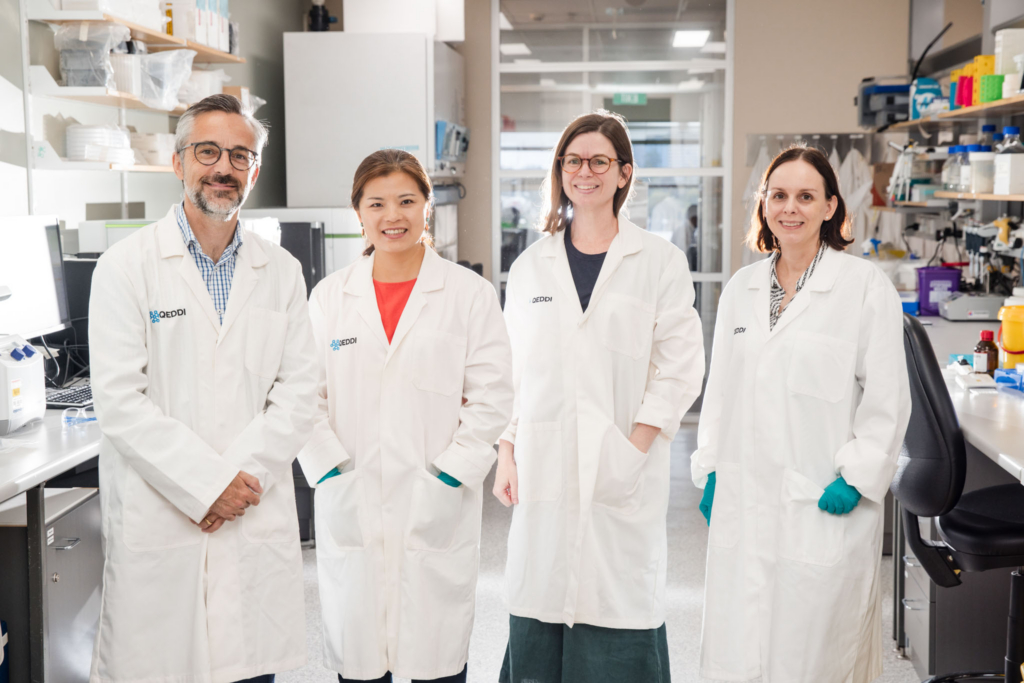
“It’s such a joy working with the C-Path team,” he said. “They are absolutely in tune with what is required for translational drug discovery research. As we learned more about the drug, we shared it with C-Path, and they learned with us and helped along the way. They were very flexible and responsive to the needs of the program.”
That understanding changed the nature of the collaboration. Rather than functioning simply as a funding organization, C-Path has worked alongside Brian and his colleagues to confront the technical and regulatory questions involved in advancing a drug toward the clinic.
The teams held in-depth discussions around the development plan, regularly reviewing timelines, activities, and individual studies. C-Path brought additional expertise to areas including safety and toxicology, enabling a critical PDX study (patient-derived xenograft prostate cancer model), and helped connect the researchers with specialists when specific questions arose.
That breadth of expertise was particularly valuable because drug development demands capabilities extending beyond discovery science. Brian and his colleagues brought deep knowledge of medicinal chemistry, pharmacology and manufacturing. C-Path’s Accelerator team, led by Executive Director Maaike Everts, Ph.D., complemented those strengths with additional perspectives and access to experts across the development continuum.
“We love working with Brian and his team. This project is a great example of what it takes to bridge the valley of death in drug development: people with different expertise and perspectives coming together around a shared goal, because drug development really is a team sport.”
The program also benefited from an expert in chemistry, manufacturing and controls (CMC), supported through C-Path funding. CMC, nonclinical safety and pharmacology and clinical development are all critical components in preparing an Investigational New Drug application for the U.S. Food and Drug Administration. While Brian’s team was highly experienced in areas such as chemistry and manufacturing scale-up, the Accelerator’s expertise and network were especially helpful as the researchers navigated non-clinical safety planning.
That collaboration allowed the team to examine proposed studies more deeply, refine study designs and make development decisions informed by the diverse experiences of the team. For Brian, the relationship was characterized by flexibility, transparency and trust.
“You get the TRxA team joining your team and helping you,” he said. “And that’s what was so good about it. You don’t feel you’re on your own and having to always explain yourself to some higher entity. So, I thought that was really brilliant. It was a good blending of two teams working together for a shared goal.”
C-Path’s support also enabled concrete development milestones. Among them was the manufacture of more than two kilograms of drug substance, material now being used to continue development of the program. Brian said the team would not have been able to complete that critical activity without C-Path’s support.
The investment helped create leverage, too. QED-203 has since been licensed to the Ellison Medical Institute (EMI), where it is now known as EMI-203. Established in 2016, EMI is a Los Angeles-based clinical and research organization focused on cancer research, translational science, and drug development, with the goal of accelerating the path from scientific discovery to patient impact.
The transition to EMI marks a significant inflection point for the program. By the time EMI-203 emerged as the development candidate, the project had moved well beyond an interesting scientific hypothesis, with a substantial research package behind it. EMI brings deep prostate cancer biology and signaling expertise, translational models, drug development capabilities, and extensive clinical trial expertise to advance the program toward Phase 1 testing in patients with metastatic castration-resistant prostate cancer (mCRPC).
Brian sees that progression, from university research, through QEDDI’s drug discovery expertise, the C-Path-supported development and, ultimately, into the hands of a clinical development partner, as translational science in action.
For a research team that has spent nearly 10 years on the program, reaching patients would be a defining milestone.
“We’ve been very fortunate to work with C-Path,” Brian said. “This (partnership) has provided key funding to enable a significantly challenging step, to get from research into development. We’re just excited to continue the journey, finish off the grant, write it up properly and support EMI to proceed to the clinic, where we’ll hopefully have further announcements in the future.”
The immediate objective is to complete the remaining preclinical development work and progress toward an investigational new drug submission. Beyond that lies the prospect of a first patient receiving EMI-203 and, eventually, determining whether years of scientific discovery and development can translate into meaningful benefit for people with advanced prostate cancer.
For Brian, the ultimate measure of impact is moving rigorous research beyond the laboratory and closer to the patients it is intended to help.