

For Monica Patton, life and autosomal recessive polycystic kidney disease (ARPKD) go hand in hand. Diagnosed at just six months old after doctors noticed abdominal swelling and discomfort, Monica doesn’t have the experience of living without an ARPKD diagnosis. From her first memories and conversations, she entered a world where survival was far from guaranteed. At the time of this diagnosis nearly four decades ago, ARPKD was widely considered fatal in early childhood. But Monica’s life would unfold differently — shaped by attentive care, resilience, and, ultimately, a commitment to helping others navigate the same uncertain path.
“It’s just kind of always been my norm,” Monica reflects. “I didn’t know anything different, I was always at the doctor as a kid. Because that was my normal, that’s probably what drove me into healthcare as an adult. I feel very comfortable in this space and taking care of patients.”
Today, Monica is not only living with ARPKD, she is thriving. She is a wife, a mother of three, and an emerging voice in the kidney disease community through her role with the Polycystic Kidney Disease (PKD) Foundation. Her journey represents both the progress made in rare kidney diseases and the urgent need to go further.
Turning Uncertainty into Advocacy
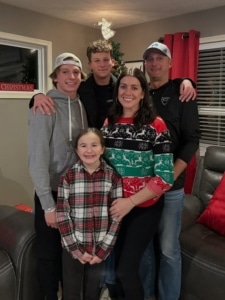
Monica’s advocacy work began more recently, sparked by disease progression and a desire to reclaim a sense of control. Through her involvement with the PKD Foundation and engagement with the Critical Path Institute’s Polycystic Kidney Disease Outcomes Consortium, she has found purpose in sharing her story — particularly with families facing a new ARPKD diagnosis.
For many parents, ARPKD brings overwhelming fear and uncertainty. Monica understands that fear intimately, not only as a patient with her single mother as her primary champion and caregiver, but now as a mother herself.
“I’ve talked to many parents of young children with ARPKD. The diagnosis is so overwhelming and makes it hard to visualize a normal life for their children,” she said. “I feel like I can offer hope that patients can still have the fulfilling lives their parents so deeply wish for them.”
Her life stands as proof of what’s possible. Though her path has required difficult decisions, including choosing adoption to avoid passing on the disease, as well as the severe health complications a pregnancy would put on her own body, Monica emphasized that a meaningful, fulfilling life is still well within reach.
“I want parents, patients, and even healthcare providers to feel a sense of hope—that even with this unexpected diagnosis, when life doesn’t unfold the way you expect, it still has the potential to be beautiful.” Monica stated.
The Hidden Complexity of Kidney Disease — It’s More Than Just the Kidneys
Monica’s experience also highlights a critical reality: kidney disease rarely affects just the kidneys.
In ARPKD, complications extend across multiple organ systems. Monica lives with congenital hepatic fibrosis, which has led to liver cirrhosis, an enlarged spleen, and life-threatening risks such as esophageal varices. Yet, as she transitioned from pediatric to adult care, she encountered a fragmented healthcare system that failed to address this complexity.
“I think the biggest issues facing the transition from pediatric to adult care is really that information and attention are lacking,” she explained. “I had been told for 15 years of my adulthood, after transitioning to an adult nephrology clinic, that I was misdiagnosed. They confidently disagreed with my ARPKD diagnosis, because they said ‘ARPKD is infantile’, and obviously I was not an infant. My clinic documentation and healthcare records continued to be dictated incorrectly; it always said ADPKD no matter how many times I would call and try to get someone to change it.”
This gap in proper diagnosis and understanding underscores a broader challenge in rare diseases, one that requires coordinated care, better education, and stronger systems to support patients throughout their lives.
This is where the work of the Critical Path Institute® (C-Path) and its PKD Consortium becomes essential.
C-Path plays a unique role in accelerating drug development by bringing together regulators, researchers, industry, and patient communities to advance treatments for diseases like PKD. Through data sharing, regulatory science, and collaborative research, the PKD Consortium is helping to lay the foundation for new therapies, particularly for conditions like ARPKD, where approved treatments remain limited.
For patients like Monica, this work is more than scientific progress, it represents possibility.
There is already momentum in the field, with an FDA-approved therapy for ADPKD. But ARPKD, often more severe and diagnosed during infancy, still lacks targeted treatments. Bridging that gap and bringing attention to unsolved medical needs is critical — and part of the work C-Path focuses on every day.
Monica sees hope in this progress.
“We hope there will soon be an FDA-approved treatment for ARPKD like there is for ADPKD; I’m just really optimistic for the future. Healthcare changes so fast and I’m excited to see where it goes and happy to be a point of hope and an advocating voice for patients and families.”
C-Path’s PKD efforts to advance biomarkers, clinical trial readiness, and regulatory pathways are key steps toward that future, ensuring that patients like Monica, and the next generation, have access to better options.
The Power of the Patient Voice
If there is one lesson Monica emphasizes above all, it is the importance of patient advocacy.
From navigating the kind of misdiagnoses that she endured, to coordinating care across specialties, she has learned that patients must be active participants in their own healthcare. It’s the primary lesson she tries to hand down to parents and their children upon their diagnoses.
“You’re a professional in your own body,” she says. “Physicians are professionals in healthcare, but you know your body best. A clear statement of the way a patient feels is one of the best diagnostic tools a healthcare provider can be offered. As a team, patients and physicians have to meet in the middle.”
Monica finds it imperative to encourage parents to teach children how to speak up early, asking questions, taking notes, and understanding their condition, so they can confidently manage their care as adults and be their own best advocates.
Looking Ahead
Monica’s story is one of resilience, but also of progress, progress made possible by advancements in care, and community support; its organizations like C-Path that work behind the scenes to transform research into real-world impact.
As she continues advocacy efforts, Monica hopes to remain a visible source of encouragement for families navigating ARPKD. Her message is simple, but powerful: hope is not only possible — it is essential.
With continued collaboration, innovation, patient-centered research and open collaboration, hope is becoming a reality for more people every day.
Want to learn more about C-Path’s PKD Consortium and its lifesaving work?


