

The SynCardia Total Artificial Heart is exactly what it sounds like: a mechanical pump that takes over for a failing human heart and keeps the person alive while they wait for a transplant. Katrina Peron spent years as an engineer on that device, handling design control, risk management, manufacturing transfers and regulatory submissions.
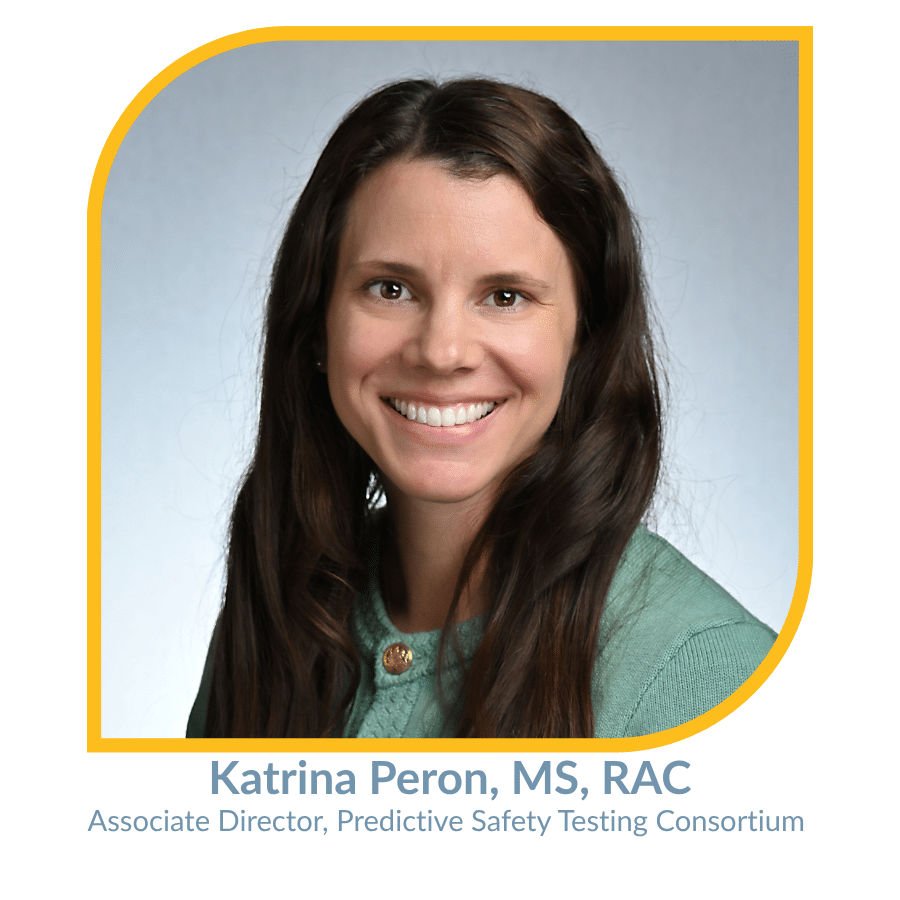
Engineering a machine that stands in for a human heart left Peron with a question she has carried with her ever since: Why do so many promising scientific advances stall on the way from the lab to the clinic? “Having great science or great technology isn’t enough,” she says. “Success depends on understanding how innovations are evaluated, validated, and ultimately accepted by regulatory authorities.” Years later, as Associate Director of the Innovation in Translational Sciences and Biomarkers program at the Critical Path Institute, she went looking for a fuller answer and found it in the Regulatory Science Graduate Certificate Program at the University of Arizona James E. Rogers College of Law.
She came to C-Path already fluent in the regulatory side of medical devices. What she desired was a wider view. Her work had evolved toward biomarker qualification and the long negotiations among industry, academia, and regulators, and she wanted formal training in the frameworks shaping innovation across the whole healthcare ecosystem, not just devices, along with the policy and decision-making behind them.
What separates U of A’s program from a standard learning module is that it is based in (and on) real regulatory cases rather than abstractions. Through C-Path, Peron and her classmates were already working alongside the regulators, sponsors, and scientific experts who shape how drugs get developed, and the coursework gave them a framework for how those exchanges work and why they unfold the way they do. “It felt less like a traditional classroom experience and more like being part of an ecosystem that is actively advancing regulatory science,” she says.
Peron also did not expect how broad the field would turn out to be. “What surprised me most was how interdisciplinary regulatory science really is,” she says. The coursework traced how science, law, policy, public health, innovation, and human need all press against one another. That breadth showed up in her own biomarker qualification work, where a strong scientific result is only the start and the harder problem is what evidence regulators will accept.
The biggest shift in Peron’s thinking was around evidence. She had spent her engineering years treating development as a technical puzzle. The U of A program reframed development as a strategic puzzle. Regulatory acceptance, she came to see, is rarely a question of scientific merit alone. It depends on generating the right evidence, engaging the right people, and earning confidence in how a tool can be used to inform a decision. That view has been especially useful in her biomarker work, where she now treats regulatory science as something that can speed innovation along rather than wait at the finish line to inspect it.
The certificate program also set up her next credential. After finishing the coursework, she began studying for the Regulatory Affairs Certification from RAPS, the Regulatory Affairs Professional Society, which she now holds.
Her advice to anyone weighing getting a University of Arizona Graduate Certificate in Regulatory Science is broad on purpose. You do not need to be a regulatory specialist to get something from it. Anyone working where science, medicine, technology, and innovation overlap will come away more effective, she says, and the material is genuinely interesting on its own terms. Her one-sentence verdict: the certificate is “a unique opportunity to understand how science, innovation, and regulation come together to transform promising discoveries into meaningful advances for patients.”
The University of Arizona Graduate Certificate in Regulatory Science is a fully online, four-course program developed in collaboration with the Critical Path Institute. The program has no entrance exam and can be completed in under a year. Find applications and course details at law.arizona.edu/graduate-certificate-regulatory-science.


