
Day 1 at #CGIC2026 set the tone for the conference. Leaders from across the drug development ecosystem came together in Washington to challenge conventional thinking and share fresh perspectives. Tuesday’s core theme centered on building a new evidence generation paradigm to get treatments to patients reliably and efficiently.
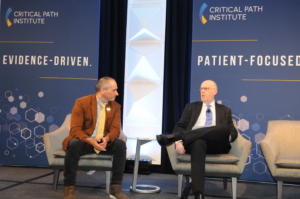
C-Path CEO Klaus Romero and CDER’s new director Mike Davis kicked off the action with a fireside chat setting the stage for new approaches to regulatory science. Davis emphasized the FDA’s partnership with C-Path: “I’m glad that we’re partnering with C-Path to help us navigate a lot of these challenges. I’m also just really proud of the amazing staff we have at CDER. In the end, we can come together to make the right decisions for patients.”
Putting patients at the center of innovation remained a powerful focal point. Adith Thummalapalli delivered an essential reminder about lived experience: “I understand the need to have medical data backing scientific claims, but I urge everyone in this room to look beyond the quantitative data and understand what those numbers truly mean. The qualitative data that is hard to capture with numbers.”
We saw that kind of patient-first mindset applied directly during a session on wearable health technologies for chronic heart failure. Christine Cong Guo of Ametris highlighted the value of these insights: “The raw wearable sensor data, as we discussed, I really encourage everyone to find a way to retain them because you know that is the benefit to the sponsor, to be able to learn more from the data. What I see is that we’re all learning in this space and have seen a lot of openness on how to address challenges as an industry.”
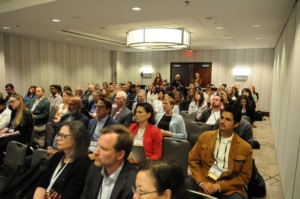
Our breakout session on artificial intelligence for rare muscular dystrophies drew a packed room! While AI faces unique hurdles with small, diverse datasets, Andre Daniel Paredes from the Muscular Dystrophy Association reminded everyone that patient protection remains paramount. “As part of a patient advocacy group, we put patients first. How does AI play a role here? We want to take an approach that doesn’t& make assumptions. The protection of the patients is key,” he said.
Another session tackled one of the most challenging areas of therapeutic innovation: neonatal drug development. The breakout focused on practical opportunities to advance medicines for the youngest and most vulnerable patients right now through innovative study designs, real-world data, plus stronger cross-sector collaboration. Building a broader ecosystem of investment and policy is absolutely essential to drive this forward.
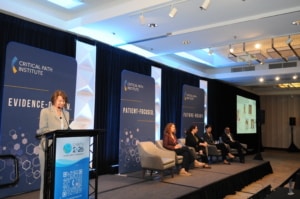
Getting the science right from the jump is critical to fixing the front end of drug development. Establishing biological confidence early reduces late-stage attrition. Rita Cowell from the University of Alabama at Birmingham hammered home the need for de-risking: “I think it’s about de-risking. You need to be open to the reality, but if you can prove the science, you should keep moving forward. You need to make sure you have the right team who can help make the right decisions.”
Scaling personalized medicine requires intense cross-sector collaboration to turn scientific advances into broad solutions. Julia Vitarello of Mila’s Miracle Foundation challenged the room to push further: “I think one of the reasons why we’re here is to think a little further out. The frameworks in place now in the US and the UK open the door to do that, but those are words on paper for me. The question we should be asking is how many of these wonderful guidance documents are translating to real treatments.”
Lynne Yao drove home the value of quantitative solutions like disease modeling to strengthen decision-making. She noted, “The collaborations and discussions that we have over the course of the next two days are so important in creating the environment that human interactions create trust.”
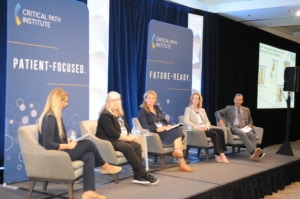
We closed out day one with a plenary discussion examining what happens after an advanced therapy receives regulatory approval. The journey for patients continues long after that initial milestone. As gene therapies, precision medicines, and other innovative approaches reshape the landscape, generating evidence must continue beyond the clinical trial to understand long-term safety and real-world effectiveness. Michelle Campbell from the FDA highlighted this ongoing process: “We always need to be thinking about what it is we are informing because the data being collected may be for other uses in the long term. It’s still going to be informative for future clinical trials. So again, it’s a life cycle. We should update this information.” It was a fitting conclusion to the day, focusing on the role of registries and adaptive evidence generation in building a complete picture of how therapies perform over time.
And…
We’ve got another action-packed day ahead TODAY!
Wednesday’s sessions will focus heavily on closing the gap between drug development and clinical care. Sessions will explore scalable data sharing approaches for rare diseases and new methods for accelerating patient identification. We will also take a deep dive into the One to Millions initiative to see how individualized breakthroughs can transform into broader global solutions.
Follow along on C-Path’s LinkedIn page for real-time updates here.


