

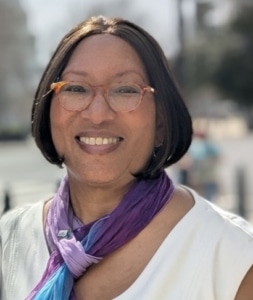
Marilyn Carson has been living with Polycystic Kidney Disease (PKD) for nearly 30 years. But rather than let that diagnosis define her, she’s driven by a sense of community, action and purpose. Sometimes that drive manifests itself in a physical challenge, such as the rim-to-rim hike of the Grand Canyon or the Marine Corps marathon. Other times, it’s been with a focus on advocacy work through the PKD Foundation. Whatever the focus has been, it has given her a sense of positivity and support in a time, particularly during the era of her initial diagnosis, when little was known about the disease and there were few methods of preventative treatment.
Marilyn first became involved with the PKD Foundation by channeling that active drive through fundraising walks, before later taking on a leadership role with its National Capital Region community. Her work now includes organizing monthly meetings, connecting patients with experts and Centers of Excellence, educating the community about legislation, and traveling to Capitol Hill to advocate directly with lawmakers. She views those meetings as an opportunity not merely to tell her own story, but to represent the broader PKD community and advocate for research, better care and, ultimately, a cure.
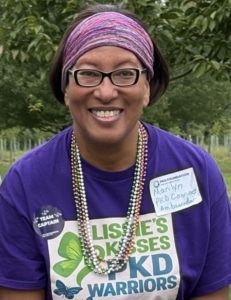
In short, Marilyn believes people living with PKD deserve a seat at the table with those who are making the decisions on the next generation of treatment for the disease. Marilyn’s experience with the PKD Foundation led her to work with Critical Path Institute® (C-Path) and its PKD Outcomes Consortium. C-Path’s PKD consortium was founded in 2010, as a collaborative partnership among C-Path, the PKD Foundation, leading academic medical centers, pharmaceutical companies, patient organizations, and international regulatory agencies like the U.S. Food and Drug Administration, the European Medicines Agency, and Health Canada.
“We are entering an incredibly promising period for PKD drug development,” said C-Path Executive Director of the PKD Outcomes Consortium Sorin Fedeles. “There is a growing pipeline of potential therapies, but developing new treatments requires more than identifying a promising drug candidate. We also need the right biomarkers, clinical endpoints, data and quantitative tools to understand disease progression and design trials that can demonstrate whether those therapies are working. That is where C-Path’s Polycystic Kidney Disease team can have a tremendous impact. By bringing together patients like Marilyn together with researchers, industry and regulators, we are building and advancing tools that can make clinical trials more efficient and ultimately help promising treatments reach people living with PKD sooner.”
Like many who receive the diagnosis, PKD runs in Marilyn’s family. When her uncle was identified as having the disease, physicians recommended a screening for all family members, which is when her diagnosis was revealed. Now, with the experience gained with the PKD Foundation and C-Path, she counsels those living through the same experiences.
When asked what advice she gives to someone who just found out they’re living with PKD, she offered, “Just don’t panic. There are so many resources today that weren’t there 30 years ago. Educate yourself, connect with community, find a clinician knowledgeable about PKD and surround yourself with people who understand the disease.”
Not only does Marilyn use her voice to counsel and assure others living with the disease, she works to amplify the patient voices even further. Drawing on her previous career as a Navy program manager, Marilyn sees a natural parallel of patients as the end user of a product. Like a program or product release, you cannot design something effectively without involving the people who actually have to use it; in this case, patients and their medicines or treatments. In regulatory science and drug development, she believes patients similarly need a seat at the table because their lived experiences reveal what they actually need and will help establish priorities.
“It’s really an exciting time for PKD and the research now seems to be really kicking in,” she explained. “It may not be fast enough to help me, but at least it’ll be able to help the PKD patients behind.”


