


Nadine Tatton is C-Path’s Critical Path for Alzheimer’s Disease Executive Director. She is also the surviving spouse of a person who lived with ALS and Frontotemporal Dementia (FTD) a group of neurological disorders caused by the degeneration of the brain’s frontal and temporal lobes. As both a neuroscientist and caregiver, Nadine brings a unique perspective to the industry, providing insight from both a scientific perspective and of those living with Alzheimer’s disease and related dementia (ADRD).
Humans are remarkable when it comes to something called pattern recognition. For example, driving a car, we automatically scan ahead and observe traffic flow. It allows us to see if a driver suddenly changes lanes in front of us and we instantly react to avoid a collision. We also recognize patterns in our spouses, partners, kids, co-workers, even the person behind the counter at your favorite coffee shop. We learn accepted patterns of social behavior and can read cues like facial expressions, body posture, and tone of voice. It is programmed into us, and we can intuitively gauge whether a person is happy or sad, if their intention is friendly or not – hello fight or flight reaction! We learn and demonstrate the appropriate behaviors expected in social situations because we can interpret these cues. We know the patterns of friends and family very well; these are the people that we know and love. And when the pattern doesn’t match with what we know, we sense something is not right, even if we cannot put a name on it.
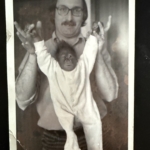
I began to get that feeling of ‘something isn’t right’ with my husband Bill when we moved to New York for our jobs. He was one of those brilliant people with both MD and PhD degrees. He was loud, funny, gregarious, and a gifted teacher who liked nothing better than being in the lab conducting research. But away from an audience, he was just himself, a kid from Alberta, Canada, who loved fly fishing, hiking, and camping. He especially loved getting into deep, play-by-play phone conversations with my dad during whatever NHL hockey game was on TV Saturday night. And yes, such intense analysis of the game is considered completely normal in Canada. This was Bill, until one day it wasn’t.
It began with an offhand remark — a little sarcastic comment about something and when I heard it, I thought, “That doesn’t sound like you.” The next time, he said something less than diplomatic to a member of the lab team and later told me, “I guess I scared the heck out of them.” This was the exact opposite of who he was, and he didn’t seem to be aware that he had changed; he thought everyone else had. One day he and I were meeting with a colleague to talk about a prospective research collaboration. It was a pleasant conversation except I couldn’t figure out why Bill was so distant. Normally, he would be enthusiastic and working out the nuts and bolts of a collaboration in the moment. When our colleague left, Bill said in an angry voice – “Did you see how he was glaring at me? Did you see that?” And I said, “No, he wasn’t glaring at you,” and that made Bill even angrier.
These changes began as isolated events, and it was hard to make the connection between these seemingly one-off moments. Many other families with loved ones living with Frontotemporal Dementia (FTD) also miss this warning sign until these events move from isolated to regular events. Unless you are trained to diagnose FTD, which is a rare neurodegenerative disease, many healthcare professionals will miss it as well. But every FTD family knows that these isolated events become more frequent and eventually replace the person you thought you knew with someone that you don’t recognize. The old Bill loved to debate ideas and have his assumptions questioned, especially by students. The new Bill now interpreted questions as a personal insult and blatant disregard for his work. Dr. William Seeley at UCSF likened FTD to an identity thief – it steals a person’s personality and a sense of self. They act out of character, they lose empathy, find social cues like facial expressions and body language difficult or impossible to read, and it is that loss of self that is hard for family and friends, partners and spouses to comprehend. Bill reached a point where he could no longer work and had to retire. About eight years later he began to have problems with weakness in one arm – a local doctor decided it was a pinched nerve. Next walking and balance became difficult to manage until he was no longer able to walk, even with assistance. Eventually he was diagnosed with ALS and passed away in 2011. We never got a diagnosis for the changes in personality or his progressive inability to navigate social situations.
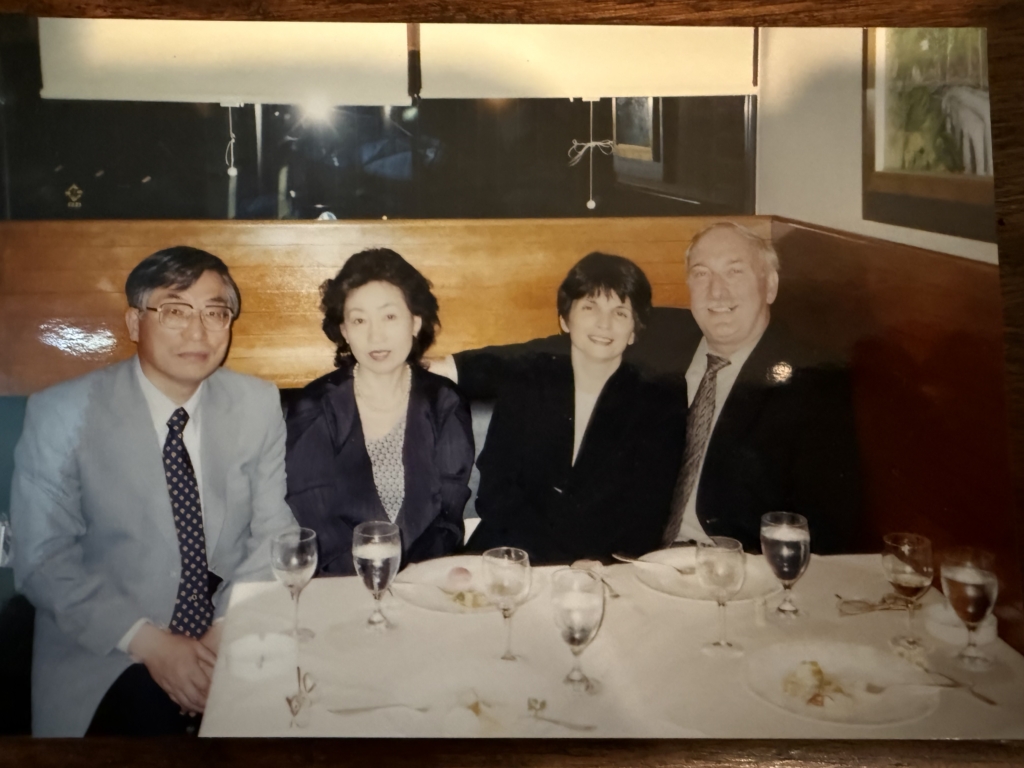
When I was preparing for a job interview with the AFTD, a disease advocacy organization for FTD, I read a research article that listed the accepted criteria for the diagnosis of the behavioral variant of FTD. The paper described Bill perfectly. I also learned that a mutation in the C9orf72 gene was discovered in 2011 and for the first time it was recognized that FTD and ALS can occur in the same person. Finally, someone had recognized Bill’s pattern, and it didn’t matter that it was years late in coming; what mattered was that all those years finally made sense.
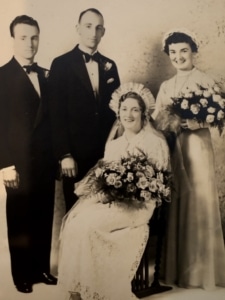
Before Bill retired, his mother began to show some mild, and isolated events of memory loss. Betty loved to talk, play bridge, go to parties and celebrate every family birthday like it was the biggest event of the year. She was extremely social and outgoing with a large circle of friends and worked in the oil and gas industry when she was a married woman. This was highly unusual at the time, but Betty thoroughly enjoyed being seen as a bold and independent woman. Betty did almost everything right in terms of a lifestyle for healthy aging. The first sign of memory loss occurred during a phone call as she described a trip that one of her friends was planning for a holiday. And then a minute later, she repeated that same information almost word for word and didn’t realize it. I told Bill and we began to keep a closer eye on her even though we lived on the other side of the country. Betty’s memory loss progressed slowly, and she could still live independently for a few more years. She began to talk more about things she did in her youth but recalled these adventures as something she and her teenage friends did just last week. One day she phoned and asked Bill if he could drive her to her cousin’s house for lunch. She didn’t realize that we were living on the other side of the country and didn’t remember that her cousin had passed away a few years ago. She soon moved in with us and immediately created a new social circle of friends and seemed more like herself. Alzheimer’s is inexorable, but it had not met Betty, who lived to be 100 years old. I was the one who had to tell her that her only child Bill had passed away the year before. I think she grasped that thought for a moment and then let it go. Sometimes there are small mercies to be had, even with Alzheimer’s disease.
As we honor Alzheimer’s Awareness Month, I’m reminded that behind every scientific term and clinical milestone are real people—families navigating heartbreak, resilience, and moments of unexpected grace. My experiences with Bill and Betty have taught me that while these diseases can alter the patterns we rely on, they never erase the humanity that connects us. Each story – every patient and caregiver – adds urgency and meaning to the work we do at C-Path and across the Alzheimer’s disease and related dementias (ADRD) community. By recognizing the early shifts, supporting families, and advancing science with compassion, we move closer to a future where these patterns need not fade, and where understanding arrives not too late, but just in time.


