
As we enter the final quarter of 2026, I continue to be inspired by the progress our community is making together. The past several months brought important milestones across C-Path from new leadership and expanding collaborations to scientific advances that are helping strengthen the global drug development ecosystem. Now, we have an opportunity to build upon that momentum and carry it through the remainder of the year.
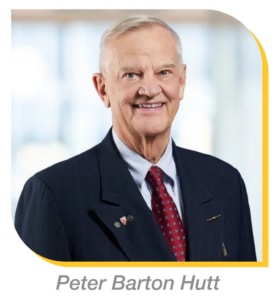
This quarter, we honored the remarkable life, career and lasting impact of longtime C-Path Board member Peter Barton Hutt, who passed away after a lifetime of service to public health. Since joining our Board in 2015, Peter shared extraordinary wisdom, intellectual rigor and an unwavering commitment to public health. His leadership helped shape modern food and drug law, and his thoughtful counsel guided C-Path through pivotal years of growth. We are deeply grateful for his service, friendship, guidance, and enduring contributions to C-Path and the field of regulatory science. His influence will be felt for generations, and our thoughts remain with his family, friends, and colleagues. Read our tribute to Peter.
Certainly, the highlight of this past quarter was our 2026 C-Path Global Impact Conference, held September 15–16 in Washington, D.C. Once again, CGIC demonstrated what is possible when patients, researchers, regulators, industry leaders, advocates and other partners come together around a shared purpose.
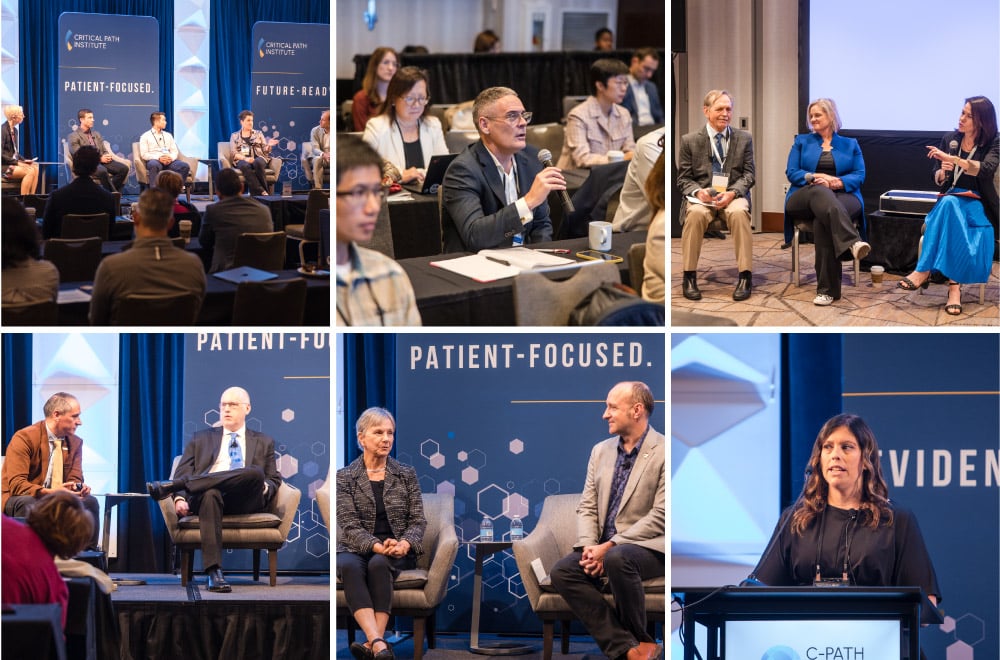
- Day One of the C-Path Global Impact Conference brought together leaders from across the drug development ecosystem in Washington, D.C., to challenge conventional thinking and explore a new paradigm for evidence generation.
- From C-Path CEO Klaus Romero and FDA CDER Director Mike Davis opening the conference with a conversation on the future of regulatory science to discussions on patient-focused drug development, artificial intelligence, neonatal drug development, personalized medicine, quantitative solutions, and post-approval evidence, one theme remained clear: collaboration and the patient voice are essential to advancing better drug development. The day underscored the importance of generating meaningful evidence throughout the entire therapeutic lifecycle and creating approaches that can help move promising treatments to patients more reliably and efficiently.
- Day two at CGIC closed out the conference with a focus on data sharing, patient voices, and emerging technologies. Dr. Milad Alucozai of Pamir Ventures and C-Path CEO Klaus Romero kicked off the morning by exploring how high-fidelity datasets can reshape biomedical innovation. Dr. Alucozai set a powerful tone right out of the gate, challenging the room to use these tools to bring true equity to the rare disease space: “I hope that more of the community that focuses on rare diseases are able to have the same opportunities as those with a larger population disease. So, I think the way we answer that is we have these high-fidelity data sets that are built out in a way that allows us to really get personalized.”
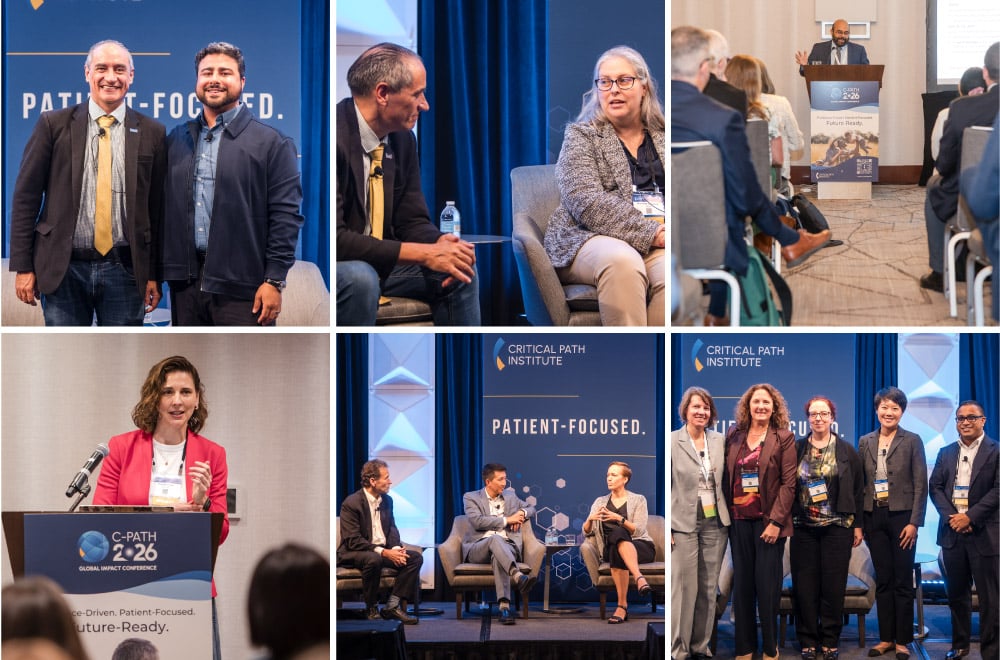
Full session recordings have been published on C-Path’s YouTube channel. Be sure to subscribe here, follow us on social media for up-to-the-minute content, and save the date for the week of September 13 for CGIC 2027, in Washington, D.C.
As we look toward the close of 2026, I am excited about what lies ahead. The relationships we have strengthened, the knowledge we have shared, and the progress we have made this year provide a strong foundation for what comes next. There is still important work ahead, and I am confident in what this community can accomplish when we work together.
Thank you for your continued partnership, trust, and commitment to C-Path’s mission. I look forward to finishing the year strong, together.
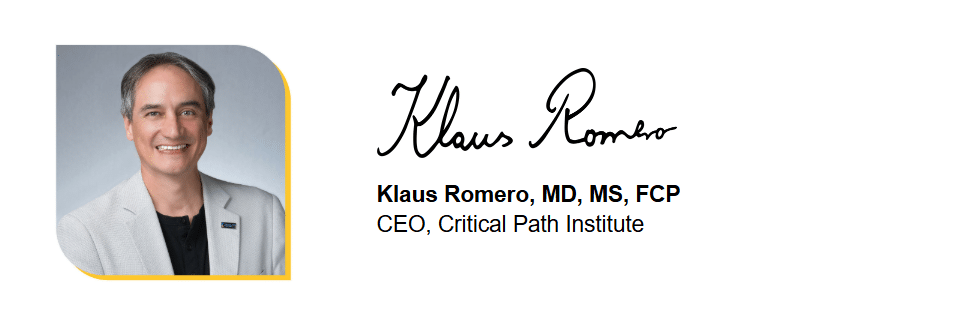
With gratitude and excitement,
Critical Path Institute Appoints Measurement Science Expert Elizabeth “Nicki” Bush as Vice President of the Clinical Outcome Assessment Program
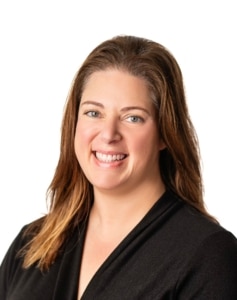
Critical Path Institute announced the appointment of Elizabeth (Nicki) Bush as Vice President of its Clinical Outcome Assessment Program. Bringing more than 20 years of scientific and leadership experience to the role, Bush will drive the strategic vision for incorporating patient perspectives into drug development. She brings extensive industry experience to the role, most recently serving as Executive Director at OPEN Health, where she led the Endpoint Strategy and COA Measurement consultancy capabilities. Her background also includes serving as Senior Director of Endpoints and Measurement Strategy at Johnson & Johnson Innovative Medicine and over a decade at Eli Lilly and Company, where she built and led the company’s Patient-Focused Endpoints and Measurement Center of Expertise.
Read the full press release here.
The Critical Path Institute Podcast
We hope you enjoy these engaging discussions that truly highlight C-Path’s collaborative approach to advancing drug development and improving global health outcomes. Subscribe wherever you get your podcasts today!
New! Episode 14: How C-Path’s Accelerator Is Impacting Tomorrow’s Medicines
New! Episode 15: The Critical Path Institute Podcast: From One to Millions — a New Vision for Individualized Medicine
New! Episode 16: The Critical Path Institute Podcast: Advancing Neuromuscular Drug Development Through Collaboration
New! Episode 17: The Critical Path Institute Podcast: How NAMs are Redefining Drug Development
Listen and subscribe here:


C-Path CEO Klaus Romero Talks One to Millions on The BioCentury Show
In a new interview, Romero explains why the real bottleneck in individualized medicine isn’t science anymore — it’s the system needed to scale it.
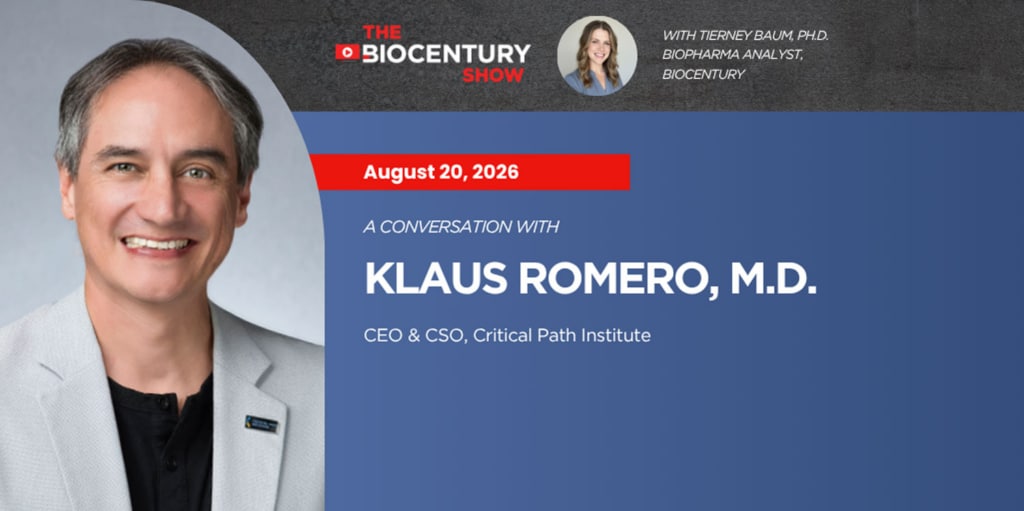
Critical Path Institute (C-Path) CEO Klaus Romero, M.D., MS, FCP, joined The BioCentury Show to discuss how the One to Millions Initiative is working to scale individualized therapies for rare and genetically defined diseases.
As Romero explained, designing a therapy for an individual patient is no longer the hard part; science has already proven that’s possible. The real bottleneck is the absence of a standardized regulatory and development system that can translate a single success into a repeatable pathway for many.
“We’re not reinventing the wheel,” Romero said. “We are trying to maximize what has been done into a joint movement that can meet the vision of what FDA laid out in the guidance.”
One to Millions is working to give shape to FDA’s Plausible Mechanism Framework, bringing together companies, academic institutions, patient groups, and regulators to standardize how evidence and methods are generated, shared, and reused across programs. It will begin with antisense oligonucleotides, a relatively mature genetic modality with enough experience across programs to support cross-program learning, with a shared safety database among its first planned deliverables. The goal is to cut down on repeated preclinical studies, shortening timelines, and lowering costs enough to make individualized medicine economically viable.
While rare diseases stand to benefit first, Romero said the long-term vision extends further, to any condition defined by a druggable genetic mutation rather than how common it is, pointing to Parkinson’s disease, which is increasingly being segmented into mutation-based subtypes facing “a similar rare disease situation.”
Watch the full interview on The BioCentury Show, and read BioCentury’s coverage: Critical Path Institute Aims to Bring Scale to Individualized Medicines.
C-Path in the News
September 14, 2026, Yahoo!Finance, GATC Health Joins Critical Path Institute’s New Approach Methodologies Developer Coalition to Advance AI-Enabled Regulatory Science
September 15, 2026, Pink Sheet, Gene-Silencing Therapies Face Different Bar Under US FDA Plausible Mechanism Framework
September 18, 2026, Pink Sheet, CDER Director Mike Davis Eyes AI as Solution to Institutional Memory Loss
September 22, 2026, Inside Health Policy, FDA Projects Major Precision Medicine Advancements
September 22, 2026, News Medical, C-Path awards $1.7 million to advance five drug development projects
October 1, 2026, Pink Sheet, Filling The Gap: New Center To Boost Non-Animal Drug Development Tool Growth
October 2, 2026, Inside Health Policy, New Federal NAM Center To Help Drug Sponsors Generate Data
Honoring Awareness, Advancing Action
Blog | Advancing Hope in Limb Girdle Muscular Dystrophies: Collaboration, Data, and Innovation During LGMDs Awareness Month
Each September, Limb Girdle Muscular Dystrophies Awareness Month shines a light on a devastating neuromuscular disease that remains widely under recognized despite its profound impact on patients, families, and caregivers.
LGMDs are a group of rare, inherited genetic disorders characterized by progressive weakness of the shoulder and hip girdle muscles due to loss of muscle fibers. Over time, people living with LGMD often experience increased difficulties with mobility and daily function, while facing a significant lack of effective treatment options.
Read the full blog here.
Social Post | International Ataxia Awareness Day
On September 25, we recognized International Ataxia Awareness Day as part of our mission to stand with individuals and families affected by ataxia around the world.
Ataxias encompass a diverse group of rare neurological disorders that can affect movement, coordination, speech, cognition, and other aspects of daily life. For many forms of ataxia, effective disease-modifying therapies remain an urgent unmet need.
At C-Path, we are proud to work alongside people with lived experience, families and caregivers, patient advocacy and research organizations, academic and clinical researchers, regulatory agencies, and drug developers to help accelerate the development of meaningful new therapies.
Read our social post here.
Blog | Building a Stronger Path to Therapies for HSP and PLS
In recognition of Hereditary Spastic Paraplegia (HSP) and Primary Lateral Sclerosis (PLS) Awareness Week, C-Path is highlighting its partnership with the Spastic Paraplegia Foundation (SPF) to help accelerate progress toward meaningful treatments. Since 2025, C-Path and SPF have worked together to evaluate the HSP and PLS research landscape, identify critical gaps, and bring patient priorities together with regulatory science expertise to strengthen clinical trial readiness and therapeutic development.
Read the full blog here.
Social Post | PKD Awareness Day
At C-Path, we recognize the importance of collaboration, data sharing and regulatory science in accelerating progress for people and families affected by polycystic kidney disease. Through our longstanding work with the PKD Foundation, we help bring together patients, researchers, industry, regulators and other partners to address critical challenges in PKD drug development.
That collaborative work continues with an expanded effort to develop Version 2.0 of the CDISC Therapeutic Area User Guide for Polycystic Kidney Disease (TAUG-PKD). The updated guide will expand support for both autosomal dominant PKD and autosomal recessive PKD, helping researchers generate more consistent, reusable and regulatory-ready data across studies, registries and clinical trials.
Read the social post here.
Latest C-Path News
- C-Path Partners with University of Arizona on Translational Research of Parkinson’s Disease in Women
- Federal Investment Launches National Facility Dedicated to Advancing Non-Animal Drug Development Tools
- GATC Health Joins C-Path’s New Approach Methodologies Developer Coalition
- C-Path’s Translational Therapeutics Accelerator Awards $1.7 Million Across Five BRIDGe Grants in Brain Health, Pediatrics and Rare Disease
- Critical Path for Parkinson’s Announces Milestone Publication Highlighting FDA Support for Novel Biomarker to Advance Precision Medicine Strategies
- C-Path Achieves Internationally Recognized Certification for Information Security Management
- C-Path Receives FDA Qualification for Rheumatoid Arthritis Fatigue Measure
- C-Path’s Duchenne Consortium Awarded a $1.9 Million DoD Grant to Advance Understanding of Cardiomyopathy in Duchenne Muscular Dystrophy
- Across Healthcare Matrix Partners with C-Path to Expand Rare Disease Data Platform Through Direct Integration
For more C-Path news, click here.
Upcoming Events
- Drug Discovery Conference | October 12–13 | San Deigo, CA | Graham Marsh
- The International Society for Quality-of-Life Research | October 18–21 | Prague, Czech Republic | Nicki Bush, Sonya Eremenco, Fraser Bocell, Alisa Heinzman
- ALS TDI Summit | October 9 |Boston, MA | Smith Heavner
- ASN Kidney Week | October 21–25 | Denver, CO| Graham Marsh, Gary Friedman
- 8th NIH Tissue Chip Consortium Joint Meeting with the Critical Path Institute’s Complex In Vitro Model Qualification Framework Public Workshop | December 7–8 | Bethesda, MD | Graham Marsh, Samantha Wilkins
Miss a recent webinar? They’re always available on demand:
- Public Private Partnerships for Rare Neurodegenerative Disease
- 2026 Clinical Outcome Assessment Program Annual Meeting
- Scalable Approaches to Patient-Centered Benefit–Risk: Defining Patient-Focused Drug Development in Precision Medicine
- Moving Biomarkers from Research to Better Real-World Care for Patients
- Meeting Patients Where They Are: Validating Remote Digital Tools for Multi-Indication NMD Research
- 27th NIH Tissue Chip Consortium Meeting + CIVM Qualification Framework Public Workshop Recap


