

March is National Kidney Month, making it an ideal time to highlight the progress and collaborations helping advance kidney health through biomarker science. In this edition, we share updates from across the Biomarker Data Repository (BmDR) community, including recent publications, new data contributions, upcoming events, and continued efforts to expand the scientific and clinical impact of kidney safety biomarkers.
A key highlight this month is the recent Clinical Pharmacology & Therapeutics publication describing real-world implementation of the FDA-qualified panel of six urine biomarkers for detecting drug-induced kidney injury (DIKI) in early clinical development. This work reflects years of collaboration across the Predictive Safety Testing Consortium (PSTC), regulators, industry, and academic partners, and demonstrates how qualified biomarkers are already helping improve safety monitoring and decision-making in drug development.
Join us on Monday, March 30 for the second BmDR virtual workshop, Moving Biomarkers from Research to Better Real-World Care for Patients. The workshop will bring together patients, clinicians, and researchers to explore how biomarker information can be communicated effectively to patients, how clinicians interpret and adjudicate biomarker data, and how large-scale datasets and advanced molecular insights are shaping the future of kidney care.
This issue also highlights the continued growth of the BmDR through new datasets, ongoing biomarker qualification activities, and an expanding portfolio of publications that strengthen the evidence base for kidney safety biomarkers. These efforts are only possible through the engagement and collaboration of our global community of contributors.
As always, patients remain central to BmDR’s mission. By combining high-quality data, rigorous science, and patient perspectives, we are working together to accelerate the development of safer therapies and improve outcomes for people affected by kidney disease.
If you are interested in contributing data, participating in BmDR committees, or engaging in upcoming workshops, we encourage you to reach out to the team at bmdr@c-path.org.
March is National Kidney Month!
We have several exciting features in observance of National Kidney Month:
Drug-Induced Kidney Injury Manuscript:
Read the Predictive Safety Testing Consortium’s (PSTC) newest publication in Clinical Pharmacology & Therapeutics, which describes the real-world implementation and impact of a U.S. Food and Drug Administration qualified panel of six urine biomarkers for detecting drug-induced kidney injury in early clinical drug development.
The article, “Biomarkers of Drug-Induced Kidney Injury: Use in Clinical Trials and Recent Examples of Impact on Drug Development,” was published online November 23, 2025, and is co-authored by BmDR members Katrina Peron, MS, RAC (C-Path) and Nicholas King (C-Path). Kidney safety monitoring is essential throughout drug development, yet standard clinical laboratory tests can lack the sensitivity and specificity needed to detect nephrotoxicity early and to inform timely decision-making. Further, these urine biomarkers can complement standard lab tests to add confidence to the lack of a DIKI signal and provide more holistic pathomechanistic insight. This publication describes how a regulatory agency-qualified panel of six urine biomarkers, developed through a collaboration conducted and funded by C-Path, the Foundation for the National Institutes of Health, and FDA, is being used in early clinical programs to support monitoring of DIKI, or lack thereof.
Read the full press release here.
C-Path Biomarker Repository Co-Chair Glenda Roberts Honored with 2026 Derek Forfang Patient Advocate Award

Critical Path Institute (C-Path) is eager to celebrate the recognition of Biomarker Data Repository Co-chair Glenda Roberts as a recipient of the 2026 Derek Forfang Patient Advocate Award. The award, presented by Ardelyx, honors leaders who have made significant contributions to advocating for people living with chronic kidney disease (CKD).
Roberts was recognized alongside four other advocates for their dedication to improving the lives of patients and families affected by kidney disease. Established in 2025, the Derek Forfang Patient Advocate Award commemorates the legacy of a passionate CKD advocate and celebrates individuals who amplify patient voices and advance meaningful change in kidney care.
Read more, here.
Closing the Gap: How Better Data Can Transform Kidney Injury Detection

In July 2024, I accepted a data manager position within Critical Path Institute’s Data Collaboration Center. Having never worked in the broader clinical research ecosystem, I underestimated just how complex and resource-intensive data collection is, along with the substantial effort required to curate and share that data in clinical settings. I carried a number of naïve assumptions, chief among them that the pharmaceutical industry operated with effectively unlimited resources and already possessed comprehensive datasets across nearly every disease area. That perspective quickly shifted. I soon came to understand the complexity, fragmentation, and collaborative effort required to generate high-quality clinical data, and the critical role that neutral conveners like C-Path play in enabling its aggregation and use.
I was assigned to a consortium within C-Path that was working with kidney data – specifically drug-induced kidney injury or DIKI. The goal of our largest project was to promote the use of a panel of non-standard-of-care clinical biomarkers. Our hypothesis was that these biomarkers would be able to inform decision-making regarding whether a patient had undergone acute kidney injury significantly faster than the standard-of-care biomarkers.
Read the full press release here.
Webinar Series:
On Demand Now | BmDR: A New Collective Resource to Drive Improvements in Kidney Health!
This workshop will feature presentations on BmDR strategy, a clinical Chronic Kidney Disease patient story, an overview of what datasets and biomarker information are available, example analyses that have been performed, and a panel discussion on the value of data sharing and what this means to kidney disease patients and the community.
REGISTER NOW: The second BmDR virtual workshop, Moving Biomarkers from Research to Better Real-World Care for Patients, is scheduled for Monday, March 30 at 2:00 PM ET and will focus on how biomarker information can be communicated effectively to patients, how clinicians interpret and adjudicate biomarker data, and how large-scale datasets and advanced molecular insights are shaping the future of kidney care. Register here.
Q&A: How does BmDR operate?
BmDR works by collecting and including deidentified data on emerging safety biomarkers’ studies (clinical and nonclinical). The initial focus of BmDR is on kidney injury biomarkers. Research groups and pharmaceutical companies can contribute their data into BmDR through a secure process, where it is then stored on the Data and Analytics Platform (DAP). Qualified researchers can then request access to the data. Once approved, they may examine the data for new applications in clinical practice and drug development to pursue regulatory qualifications of the biomarkers. When biomarkers are qualified, they have set ranges of values and determined contexts of use that may be used during clinical trials for drugs, and throughout the entire drug development process to monitor safety and effectiveness.
Question from the December 2025 Inaugural Workshop
Q: With the evolving technologies and standardized assays, how can we implement these panels in clinical studies? (Venkata Sabbisetti)
A: Liquid biomarker assays and their platforms may evolve over time, however, the validation/QC steps required for FDA and EMA Clearances are standards that are set in stone. The assays for each of the novel biomarkers and the laboratory service providers utilized by PSTC can be shared with you and any other qualified researchers once you have made the request for C-PATH/BmDR Access.”
FDA and EMA validation and clearance requirements are clearly spelled out on their websites. The PSTC Novel Urine Biomarker Panel has been qualified by FDA since 2018. The assays and their platforms (including reagents, SOPs, etc) have been previously cleared by EMA & FDA via processes separate and distinct from C-PATH/PSTC Qualifications.”
The C-Path BmDR Oversight Committee Chairs are available to speak with BmDR Qualified Researchers to address remaining questions and provide further clarifications.
Video Resources:
What is the Biomarker Data Repository?
What Are Biomarkers and Why Are They Important?
For additional questions on BmDR, view the Technical and Patient-Focused FAQs.
Patient Corner
Last quarter, C-Path Assistant Director of Communications and BmDR Community member Alex Diegel led a discussion with nephrologist Gary Friedman during our December workshop. Alex and Gary have had regular check-ins since Alex’ diagnosis of IgA Neuropathy, a common form of Chronic Kidney Disease, last May, and the two brought their discussions to life during this engaging session. This conversation centered on the lifestyle and dietary changes needed to keep someone living with CKD healthy for a long time, what developments we would like to see to enhance the lives of those with CKD, and how C-Path helps shape that future with its life-changing work.
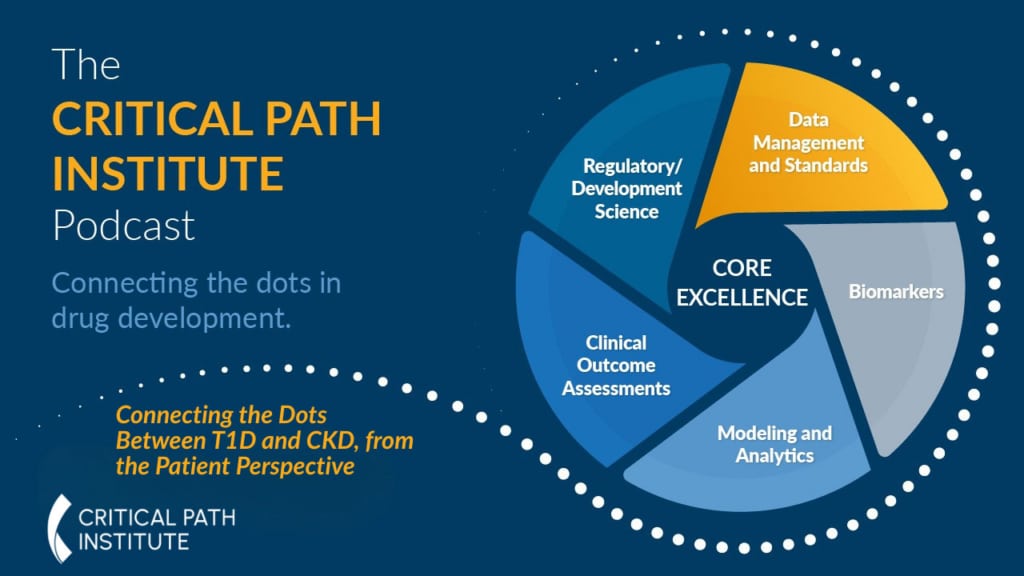
This month, Alex joined C-Path’s Hailey Davenport for a podcast to discuss the latest in CKD, as well as the commonalities shared in the respective diagnostic odysseys of Alex and Hailey, who has lived with T1D since she was 14 years old, and works as a Senior Program Manager for C-Path’s Type 1 Diabetes Consortium. Listen Now:


Latest Developments
PSTC’s Kidney Safety Project team is working to finalize the Full Qualification Package submission to FDA since receiving a positive determination letter from the FDA in December 2024 for the Qualification Plan for a Novel Biomarker Panel (NBMP). The statistical analysis plan (SAP) has been completed, and the team is plans to submit the Full Qualification Package requesting qualification of the NBMP in Q2 2026. This work will demonstrate how the NBMP can be used in conjunction with standard laboratory tests to indicate response to DIKI. Qualification of the NBMP would support early detection, monitoring, and potential reversibility of kidney injuries during clinical trials. Read the press release here.
By the Numbers
New Data
This month, two Data Contribution Agreements (DCA) have been executed with organizations for their data to be added to the BmDR DAP. One study measured kidney injury biomarkers in normal healthy volunteers (NHV), chronic kidney disease patients, and kidney transplant pediatric subjects. The other dataset measured kidney injury biomarkers after mesothelioma surgery and cisplatin administration. These datasets will be available on the DAP in early 2026.
This month, two Data Contribution Agreements (DCA) have been executed with organizations for their data to be added to the BmDR DAP. One study measured kidney injury biomarkers in normal healthy volunteers (NHV), chronic kidney disease patients, and kidney transplant pediatric subjects. The other dataset measured kidney injury biomarkers after mesothelioma surgery and cisplatin administration. These datasets will be available on the DAP in early 2026.
Enter the BmDR DAP to view the BmDR data collection and request datasets:
https://portal.cpdap.c-path.org/.
Accessing Data on BmDR
Qualified researchers can request access to the BmDR DAP to review and interrogate data, as well as request specific datasets, using this link: https://portal.cpdap.c-path.org/. For further instructions and details on how to review and request datasets on the DAP, watch this video and attend our December workshop.
Contributing to BmDR
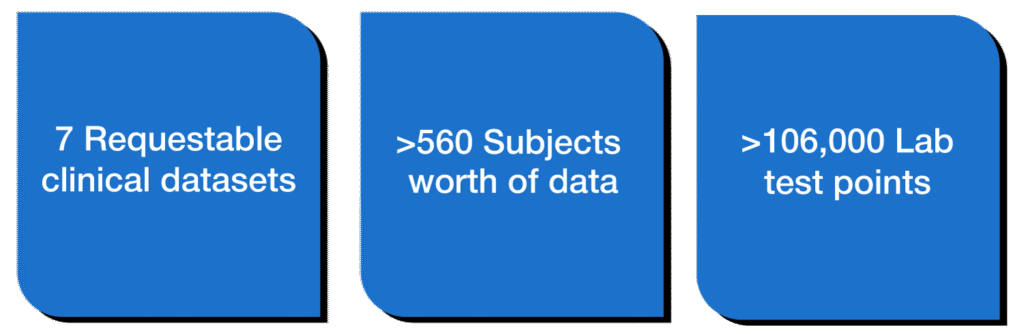
The BmDR team is in talks with organizations for an additional 10 clinical datasets, which will aid in our goal of expanding the volume and capabilities of the repository. Outreach continues to consortia, academic researchers, and companies with relevant data sets to contribute.
Please consider contributing your data to BmDR. Populations of interest to the team include pediatric study populations. If interested in participating in any of the BmDR committees or to discuss contributing data, please contact bmdr@c-path.org, Nicholas King or Katrina Peron.
Recent and Upcoming Events
May 20–21, 2026 – Kidney Innovation Conference (Washington, DC)
September 15-16, 2026 – C-Path’s 2026 Global Impact Conference
C-Path’s flagship event is set to return to downtown Washington, D.C. this September 15-16 at the Washington Marriott at Metro Center. Building on momentum from last year’s successful conference, the C-Path Global Impact Conference (CGIC) will host regulators, researchers, industry experts, and patient advocates for two days of thought-provoking discussions, keynote speakers, networking events and more as we set the stage for the next wave of medical and regulatory science innovation. You won’t want to miss this exclusive event as we redefine the evidence-generation enterprise for drug development in the 21st Century with topics focused on innovation in accelerating patient identification, enrichment, and stratification, closing the gap between drug development and clinical care, new approaches to patient centric clinical trials, and more.
Be sure to check in as we publish more details, including speakers, panelists, session titles and the conference agenda.
Don’t wait! Save the date.
WATCH BmDR Co-Chair Gary Friedman’s interview from last year’s conference here.
Recent Publications
Zabka, T.S., Lawton, M., Chu, T., Friedman, G.S., Peron, K., Sultana, S.R., Glaab, W.E. and King, N.M.P. (2026), Biomarkers of Drug-Induced Kidney Injury: Use in Clinical Trials and Recent Examples of Impact on Drug Development. Clin Pharmacol Ther, 119: 608-617.
Roberts, Glenda V. Advancing Health Equity in Kidney Disease through Sustainable Policy and Community Partnership: Patient Perspectives and Research Realities. Clinical Journal of the American Society of Nephrology:10.2215/CJN.0000000929, November 13, 2025. | DOI: 10.2215/CJN.0000000929
Special consideration: commentary on the 2025 FDA Bioanalytical Method Validation for Biomarkers.
Quadrini, K. J., Aubrecht, J., King, N. M. P., Fernandez-Metzler, C., Ni, Y. G., Sauer, J. M., … Piccoli, S. P. (2025). Bioanalysis, 17(14), 899–900
Early and Sensitive Detection of Cisplatin-Induced Kidney Injury Using Novel Biomarkers.
Strader, M., Friedman, G., Benain, X., Camerlingo, N., Sultana, S., Shapira, S., Aber, N., & Murray, P. T. 2025. Kidney International Reports, 10(4), 1175–1187
Waikar, Sushrut S., Robin Mogg, Amanda F. Baker, Gyorgy Frendl, Michael Topper, Scott Adler, Nicholas MP King, Stefan Sultana, et al. 2025. Clinical Pharmacology & Therapeutics
Adeyemi O Adedeji, Michael R Tackett, Genesis Tejada, James E McDuffie, Investigation of urinary miRNA profile changes in amphotericin B-induced nephrotoxicity in C57BL/6 mouse, Sprague–Dawley rats and Beagle dogs, Toxicological Sciences, Volume 205, Issue 1, May 2025, Pages 53–6
Aubrecht, Jiri, David Potter, John Michael Sauer, Roscoe Warner, Kent Johnson, Mitchell R McGill, Katrina Peron, and Nicholas M P King. Toxicological Sciences, November 6, 2024.
Hartung, Thomas, Nicholas M. P. King, Nicole Kleinstreuer, Marcel Leist, and Danilo A. Tagle. October 22, 2024. ALTEX – Alternatives to Animal Experimentation, 41(4):545–566
Qualified kidney injury biomarkers demonstrate value during early clinical drug development.
Ravindra KC, Fader KA, Potter D, Radi ZA, Friedman GS, Brenneman KA, Amin NB, Weiss R, Danto SI, Page K, Ramaiah SK, Vaidya VS. Toxicological Sciences. October 1, 2024, 201(2):206–215


